
 SEE INSIDE
ISBN: 9780814656938, 5693
eISBN: 9780814680094, E8009
eFormats Available
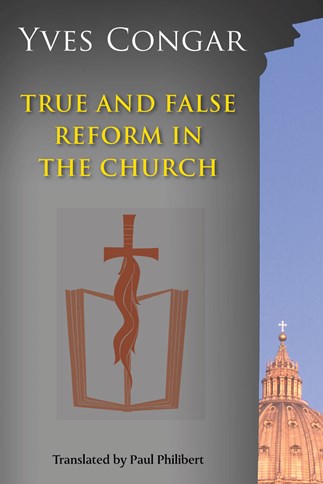
Archbishop Angelo Roncalli (later Pope John XXIII) read True and False Reform during his years as papal nuncio in France and asked, "A reform of the church’is such a thing really possible?" A decade later as pope, he opened the Second Vatican Council by describing its goals in terms that reflected Congar's description of authentic reform: reform that penetrates to the heart of doctrine as a message of salvation for the whole of humanity, that retrieves the meaning of prophecy in a living church, and that is deeply rooted in history rather than superficially related to the apostolic tradition. Pope John called the council not to reform heresy or to denounce errors but to update the church's capacity to explain itself to the world and to revitalize ecclesial life in all its unique local manifestations. Congar's masterpiece fills in the blanks of what we have been missing in our reception of the council and its call to "true reform."
Yves Congar, OP, a French Dominican who died in 1995, was the most important ecclesiologist in modern times. His writings and his active participation in Vatican II had an immense influence upon the council documents. With a few other contemporaries, Congar pioneered a new style of theological research and writing that linked the great tradition of Scripture and the Fathers to contemporary pastoral questions with lucidity and passion. His key concerns were the unity of the church, lay apostolic life, and a revival of the church’s theology of the Holy Spirit. He was named a cardinal by Pope John Paul II in recognition of his profound contributions to the Second Vatican Council.
Paul Philibert, OP, has taught pastoral theology in the United States and abroad. He is a Dominican friar of the Southern Province. His translation of a collection of Congar's essays on the liturgy has recently been published by Liturgical Press under the title At the Heart of Christian Worship. His book The Priesthood of the Faithful: Key to a Living Church (Liturgical Press, 2005) reflects the ecclesiology of Yves Congar and his vision of the apostolic life of the faithful.
ISBN: 9780814656938, 5693
 Adding to cart...