
 SEE INSIDE
ISBN: 9780879071738, CS273P

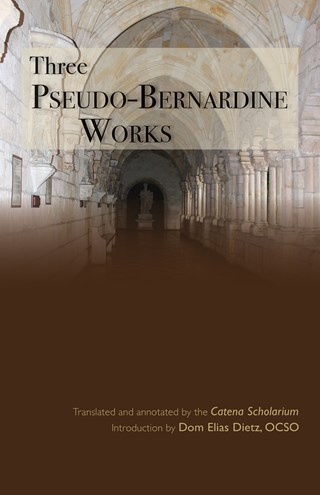
During the "Silver Age" of the Cistercians (the late twelfth and thirteenth centuries), pseudepigraphical compositions bearing the name Bernard flourished. Important for the history of monasticism and, more broadly, of Christian spiritual formation and practice, these little-studied writings interpret, appropriate, transform, and apply Saint Bernard of Clairvaux's authentic works, transmitting them to new audiences.
Under the direction of Ann Astell and Joseph Wawrykow, with the assistance of Thomas Clemmons, a talented team of young scholars from the University of Notre Dame (the Catena Scholarium) offers here a complete translation of three of these Pseudo-Bernardine essays, providing notes that identify sources, clarify allusions, highlight rhetorical strategies, and demonstrate overall a fascinating, intertextual complexity. The Bernard who emerges from these texts speaks with many voices to herald a living, Bernardine tradition.
Ann W. Astell is the John Cardinal O’Hara Professor of Theology at the University of Notre Dame. The author of seven books and the editor or co-editor of seven volumes, she has recently published essays on Honorius Augustodunensis, Bernard of Clairvaux, Eadmer of Canterbury, and Aelred of Rievaulx.
Joseph Wawrykow is professor of theology at the University of Notre Dame. An expert on thirteenth-century Scholastic theology, he is the author of God's Grace and Human Action: "Merit" in the Theology of Thomas Aquinas (1996) and The Westminster Handbook to Thomas Aquinas (2005). He is currently preparing a volume of translations in high medieval Christology.
ISBN: 9780879071738, CS273P
Get monthly newsletters sent to your inbox.
View our privacy policy here. You may unsubscribe at anytime.
 Adding to cart...